bosch induction hob manual
Safety Instructions
Carefully read this manual before use‚ keeping it safe for future reference or new owners. Do not connect a damaged appliance;
ensure proper installation and adherence to all provided guidelines for safe operation.
Observe all safety instructions to prevent potential hazards and ensure the longevity of your Bosch induction hob.
1.1 General Information
Before you begin using your new Bosch induction hob‚ it is absolutely crucial to thoroughly read and understand this instruction manual. This document contains vital information regarding the safe operation‚ installation‚ and maintenance of your appliance. Retain these instructions‚ along with the appliance pass and any accompanying product information‚ in a secure location for future consultation or to provide to any subsequent owner of the hob.
Do not connect the induction hob to a power supply if you notice any visible damage. Inspect the appliance carefully for any defects before each use. If damage is detected‚ refrain from operating the hob and contact qualified service personnel immediately. Familiarize yourself with the hob’s features and controls as described in this manual to ensure optimal performance and safety. Always prioritize safety when operating electrical appliances.
This appliance is intended for household use only.
1.2 Intended Use
This Bosch induction hob is specifically designed for household use only‚ intended solely for the cooking of food. It is engineered to heat cookware directly through electromagnetic induction‚ offering a safe and efficient cooking experience. The appliance is not intended for commercial or industrial applications‚ nor should it be used for purposes other than those explicitly outlined in this manual.
Using the hob for anything beyond its intended purpose – such as heating objects‚ warming plates outside of the cooking process‚ or as a work surface – is strictly prohibited and may result in damage to the appliance or pose a safety hazard. Ensure the hob is used in a well-ventilated area and that all cooking activities are conducted responsibly.
The appliance is intended to be used by adults familiar with its operation and safety precautions. Supervise children or individuals with reduced physical‚ sensory‚ or mental capabilities when they are near the hob.
1.3 Important Safety Warnings
Caution! This appliance generates heat during operation. Avoid touching hot surfaces‚ including the cooking zones‚ immediately after use. Allow sufficient cooling time before handling cookware or cleaning the hob. Never operate the hob with a damaged cord or plug‚ and do not use an extension cord.
Individuals with pacemakers or other implanted medical devices should consult their physician before using an induction hob‚ as the electromagnetic fields may cause interference. Keep metallic objects‚ such as knives‚ forks‚ or jewelry‚ away from the induction zones during operation.
Do not place flammable materials near the hob‚ and always supervise cooking processes to prevent fires. Ensure proper ventilation during use‚ and never leave the hob unattended while cooking. Disconnect the appliance from the power supply before cleaning or performing maintenance.

Preventing Damage to the Appliance
Avoid incorrect usage‚ damage from unsuitable cookware‚ and restrictions on cleaning products to maintain the appliance’s functionality and extend its operational lifespan.
Proper care ensures lasting performance.
2.1 Incorrect Use
To prevent damage to your Bosch induction hob‚ avoid placing metallic objects‚ such as knives‚ forks‚ or lids‚ directly onto the hob surface when it is in operation‚ as this can cause scratches or even malfunctions.
Never operate the hob without cookware present‚ as this can lead to overheating and potential damage to the glass ceramic surface. Do not slide cookware across the hob surface‚ as this can also cause scratches.
Avoid applying excessive force or impact to the hob surface. Do not use the hob as a work surface or for storing items. Ensure that the ventilation openings are not blocked‚ as this can lead to overheating.
Furthermore‚ refrain from using abrasive cleaning agents or scouring pads‚ as these can damage the surface. Always follow the cleaning instructions provided in the manual to maintain the hob’s pristine condition and optimal performance.
2.2 Damage from Cookware
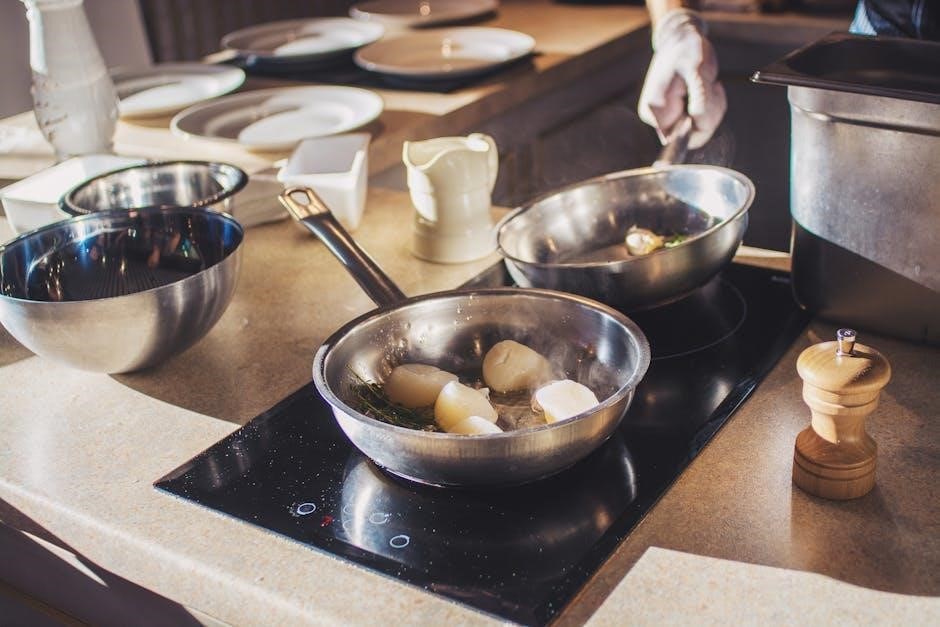
Utilizing unsuitable cookware can significantly damage the glass ceramic surface of your Bosch induction hob. Ensure your cookware is specifically designed for induction cooking‚ possessing a ferromagnetic base.
Cookware with damaged or uneven bases can cause inefficient heating and potential scratching. Avoid using cookware made of aluminum or copper without an induction-compatible base. Rough-bottomed pots and pans will undoubtedly scratch the hob’s surface‚ diminishing its appearance and functionality.
Always lift cookware when moving it across the hob; sliding can cause abrasions. Regularly inspect your cookware for any damage‚ and avoid using chipped or warped items.
Proper cookware selection is crucial for both optimal performance and the preservation of your induction hob’s integrity‚ extending its lifespan and maintaining its aesthetic appeal.
2.3 Cleaning Product Restrictions
Avoid using abrasive cleaning products‚ scouring pads‚ or harsh chemicals on your Bosch induction hob’s glass ceramic surface. These can cause permanent scratches and damage the sensitive heating elements beneath.
Specifically‚ steer clear of oven cleaners‚ bleach‚ ammonia-based products‚ and stainless steel cleaners. Opt instead for specialized ceramic hob cleaners designed to gently remove residue without causing harm.
Always ensure the hob has completely cooled down before cleaning. Stubborn stains can be carefully removed with a plastic scraper‚ followed by a damp cloth and hob cleaner.
Never immerse the hob in water or allow liquids to seep into the internal components. Proper cleaning practices are essential for maintaining the hob’s appearance and ensuring its continued safe operation.

Environmental Considerations & Energy Saving
Utilize energy-efficient cooking practices and responsibly dispose of the appliance at the end of its life cycle‚ following local regulations for recycling.
Reduce energy consumption and minimize environmental impact through mindful hob usage.
3.1 Energy Efficiency Tips
To maximize energy efficiency when using your Bosch induction hob‚ always ensure cookware bases are perfectly smooth and match the size of the cooking zone. Using lids on pots and pans significantly reduces heat loss‚ accelerating cooking times and conserving energy.
Consider utilizing residual heat whenever possible – switch off the zone slightly before cooking is complete‚ allowing the retained heat to finish the process. This minimizes energy waste and is ideal for simmering or keeping food warm.
Avoid preheating zones unnecessarily; induction heats the cookware directly‚ eliminating the need for lengthy preheating periods. Select the lowest power level that effectively achieves your desired cooking results‚ as higher settings consume more energy. Regularly cleaning the hob surface ensures optimal heat transfer and efficiency.
Remember‚ smaller cookware items will heat up faster‚ requiring less energy overall. By implementing these simple tips‚ you can significantly reduce your energy consumption and contribute to a more sustainable lifestyle.
3.2 Responsible Disposal
Proper disposal of your Bosch induction hob is crucial for environmental protection. Do not dispose of the appliance with your household waste. Instead‚ utilize designated collection facilities for waste electrical and electronic equipment (WEEE). These facilities ensure that valuable materials are recovered and recycled responsibly‚ minimizing environmental impact.
Contact your local authorities or waste management company for information regarding the nearest WEEE collection point. Removing the power cord before disposal is essential for safety. By participating in responsible disposal practices‚ you contribute to resource conservation and prevent harmful substances from entering the environment.
Many retailers also offer take-back programs for old appliances. Always adhere to local regulations regarding the disposal of electronic devices. Your cooperation helps create a more sustainable future and protects our planet for generations to come.
Ensure compliance with all applicable environmental laws.
Understanding Your Bosch Induction Hob
Familiarize yourself with your appliance’s features‚ control panel‚ zone indicators‚ and layout for optimal performance. This ensures efficient and safe cooking experiences.
Explore all functionalities!
4.1 Control Panel Overview
The control panel is your central hub for operating the Bosch induction hob. It typically features a touch-sensitive surface‚ offering intuitive control over all cooking functions. Key elements include power buttons for turning the hob on and off‚ zone selection buttons to activate individual cooking zones‚ and plus/minus buttons for precise power level adjustments.
Additional features often include dedicated buttons for PowerBoost‚ timer settings‚ and the childproof lock. Indicator lights clearly display which zones are active and their current power levels. Some models may also incorporate a digital display showing selected settings or remaining timer durations. Understanding the symbols and layout of the control panel is crucial for efficient and safe operation. Refer to the diagrams in this manual for a detailed visual guide to each button and indicator.
Touch controls respond to a light touch‚ so avoid pressing too hard. Always ensure your fingers are dry when using the control panel for optimal responsiveness.
4.2 Zone Indicators & Settings
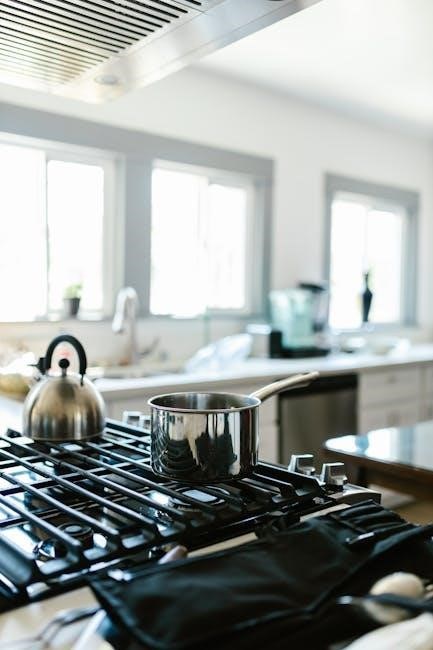
Each cooking zone on your Bosch induction hob is equipped with indicator lights to display its operational status. When a zone is active‚ the indicator light illuminates‚ clearly showing which areas are generating heat. Power level settings are typically indicated by a series of illuminated segments or numerical displays alongside the zone indicator.
These indicators allow for quick and easy monitoring of cooking temperatures. Higher power levels are represented by more illuminated segments or larger numbers. Settings range from low simmer settings to high-heat boiling options‚ providing versatility for various cooking needs. Some models feature a heat-up indicator‚ showing when a zone is initially heating up‚ and a residual heat indicator‚ warning you when a zone is still hot after being switched off.
Always be mindful of the zone indicators to prevent accidental burns and ensure safe operation.
4.3 Hob Layout & Features
Your Bosch induction hob boasts a sleek‚ frameless design for easy cleaning and a modern aesthetic. The hob surface is constructed from durable ceramic glass‚ resistant to scratches and thermal shock. Cooking zones are clearly marked‚ varying in size to accommodate different cookware dimensions.
The control panel‚ typically located at the front or side‚ provides intuitive access to all hob functions. Some models incorporate features like a PowerBoost function for rapid heating‚ and a timer for precise cooking control. Zone bridging allows combining adjacent zones for larger cookware. Safety features‚ such as a childproof lock‚ are also commonly integrated.
Familiarize yourself with the specific layout of your model to maximize its functionality and enjoy a seamless cooking experience. Refer to the control panel overview for detailed explanations of each button and indicator.
Operating the Induction Hob
To begin‚ switch on the hob and select your desired cooking zone. Adjust the power level using the intuitive controls for precise temperature management during cooking.
Ensure cookware is suitable for induction before use.
5.1 Switching On & Off
Activating your Bosch induction hob is straightforward. Typically‚ a dedicated power button‚ often symbolized by a circle with a vertical line‚ initiates operation. Press this button once to turn the hob on; a visual indicator‚ such as illuminated zone markings‚ will confirm activation.
To deactivate the hob‚ simply press the same power button again. The zone indicators will extinguish‚ signifying that the hob is switched off. It’s important to note that the surface may remain warm for a period after use due to residual heat – exercise caution.
Some models feature a master power switch‚ controlling all zones simultaneously. Others allow independent zone control‚ enabling you to switch individual cooking areas on or off as needed. Always ensure the hob is completely off when not in use‚ and avoid placing objects on the surface while it’s still warm to prevent damage or potential hazards. Refer to your specific model’s diagram for precise button locations.
Remember to disconnect the appliance from the power supply during extended periods of non-use.
5.2 Selecting Cooking Zones
Your Bosch induction hob features multiple cooking zones‚ each designed to accommodate various pot and pan sizes. To select a zone‚ simply touch the corresponding zone indicator on the control panel. A visual confirmation‚ like a flashing outline or a highlighted symbol‚ will indicate the chosen zone is active.
Zone selection is crucial for efficient cooking. Ensure your cookware is appropriately sized for the selected zone; using a smaller pot on a larger zone wastes energy. Some models offer flexible zones‚ allowing you to combine adjacent areas for larger cookware.
The control panel’s layout clearly identifies each zone. Refer to the hob layout diagram in your manual to understand the zone arrangement. Once a zone is selected‚ you can adjust the power level to achieve your desired cooking temperature. Remember to always center your cookware on the selected zone for optimal performance and safety.
Experiment with different zones to find the best fit for your cooking needs.
5.3 Power Level Adjustment
Adjusting the power level on your Bosch induction hob is intuitive and precise. After selecting a cooking zone‚ use the ‘+’ and ‘-’ buttons on the control panel to increase or decrease the power. Most models feature multiple power levels‚ typically ranging from 1 to 9‚ with 9 being the highest heat setting.
Power levels correspond to approximate heat intensities – lower numbers for simmering and gentle heating‚ higher numbers for boiling and searing. The control panel displays the selected power level for each active zone.
Experimentation is key to finding the ideal power level for different recipes. Start with a medium setting and adjust as needed. Remember that induction heating is very responsive‚ so changes in power level are reflected quickly. Always prioritize safety and avoid setting excessively high power levels for extended periods.
Fine-tune your cooking for perfect results every time.
Advanced Features
Explore enhanced functionalities like PowerBoost for rapid heating‚ precise timer settings for automated cooking‚ and the childproof lock for added safety and peace of mind.
Unlock the full potential of your Bosch induction hob!
6.1 PowerBoost Function
The PowerBoost function delivers an extra surge of power to quickly heat up cooking zones‚ significantly reducing boiling times – ideal for rapidly bringing liquids to a boil or searing meats. This feature is particularly useful when you need immediate‚ intense heat for a specific cooking task.
To activate PowerBoost‚ select the desired cooking zone and then press the PowerBoost symbol. The indicator light will illuminate‚ signifying that the function is active. It’s important to note that PowerBoost is typically available only for the two largest cooking zones on the hob.
During PowerBoost operation‚ other zones may temporarily receive reduced power to accommodate the increased demand. Once you deactivate PowerBoost‚ the hob will automatically return to its normal power distribution. Always exercise caution when using this function‚ as cookware and liquids will heat up very quickly.
6.2 Timer Settings
Bosch induction hobs offer versatile timer settings to enhance your cooking experience‚ allowing you to precisely control cooking durations. You can set a timer for a single cooking zone‚ or utilize a kitchen timer independent of specific zones.
To set a zone timer‚ select the desired cooking zone and then activate the timer function. Use the control panel to input the desired cooking time in minutes and seconds. The countdown will begin‚ and an indicator will display the remaining time. Once the timer reaches zero‚ the zone will automatically switch off.
The kitchen timer functions independently and can be used for reminders or to time other kitchen tasks. Activate the kitchen timer using the designated button and set the desired duration. It will sound an audible alarm when the time expires.
6.3 Childproof Lock Activation
The childproof lock feature on your Bosch induction hob is crucial for safety‚ preventing unintended operation by children. Activation ensures the control panel is disabled‚ rendering the hob inoperable even if buttons are pressed.
To activate the childproof lock‚ typically you’ll need to press and hold a specific combination of buttons – often the key symbol combined with another button – until a lock indicator illuminates on the control panel. This confirms the lock is engaged.
When the lock is active‚ any attempt to change settings or turn on a cooking zone will be ignored. To deactivate the lock‚ repeat the button combination. The lock indicator will disappear‚ restoring normal operation. Always ensure the hob is cool before deactivating the lock‚ and remember to supervise children in the kitchen.
Maintenance & Troubleshooting
Regular cleaning and addressing common issues will maintain optimal performance. Consult the manual for procedures‚ solutions‚ and error code explanations for effective troubleshooting.
7.1 Cleaning Procedures
Before cleaning‚ ensure the induction hob is cool and switched off to prevent burns or damage. Utilize a soft cloth or sponge with warm water and mild detergent for routine cleaning of the glass ceramic surface.
Avoid abrasive cleaners‚ scouring pads‚ or harsh chemicals as they can scratch and damage the hob’s surface. For stubborn stains or burnt-on food residue‚ apply a specialized ceramic hob cleaner following the product’s instructions carefully.
Wipe the surface thoroughly with a clean‚ damp cloth to remove any cleaner residue. Pay attention to the control panel‚ cleaning it gently with a slightly damp cloth. Regularly clean the area around the cooking zones to prevent buildup. Do not immerse the hob in water or any other liquid.
For spills‚ immediately wipe them up with a clean cloth to prevent them from burning onto the surface. Always ensure the hob is completely dry before switching it back on.
7.2 Common Issues & Solutions
If the hob doesn’t heat‚ check the power supply and ensure it’s properly connected. Verify the cookware is induction-compatible and placed correctly on the cooking zone. A faulty connection or unsuitable cookware are frequent causes.
For error codes‚ refer to section 7.3 for specific meanings and troubleshooting steps. If the hob switches off unexpectedly‚ it might be due to overheating; allow it to cool before restarting. Ensure adequate ventilation around the appliance.
If the control panel is unresponsive‚ try resetting the hob by disconnecting it from the power supply for a few minutes. If food burns onto the surface‚ use a ceramic hob scraper carefully to remove the residue after the hob has cooled.
Persistent issues may require contacting Bosch customer service for professional assistance. Always prioritize safety and avoid attempting repairs yourself.
7.3 Error Codes & Meanings
Error codes displayed on the hob indicate specific issues requiring attention. “E01” often signals a communication error between the control panel and the hob module; try resetting the appliance. “E02” may indicate an overheating issue – allow the hob to cool and restart.
“E04” frequently points to an incorrect voltage supply; verify your electrical connection. “E05” suggests a sensor malfunction‚ potentially requiring professional service. “E11” indicates a pot detection problem; ensure compatible cookware is centered on the zone.
“F01” or similar “F” codes generally denote more serious internal faults. Consult the full error code list in the appliance documentation or on the Bosch website for a comprehensive understanding.
Do not attempt to repair internal faults yourself. Contact Bosch customer service‚ providing the exact error code for efficient diagnosis and support.